Annika Berglund
'Cradling III'
A closer look by Beatriz Gil Vattier, intern at Olivier Cornet Gallery
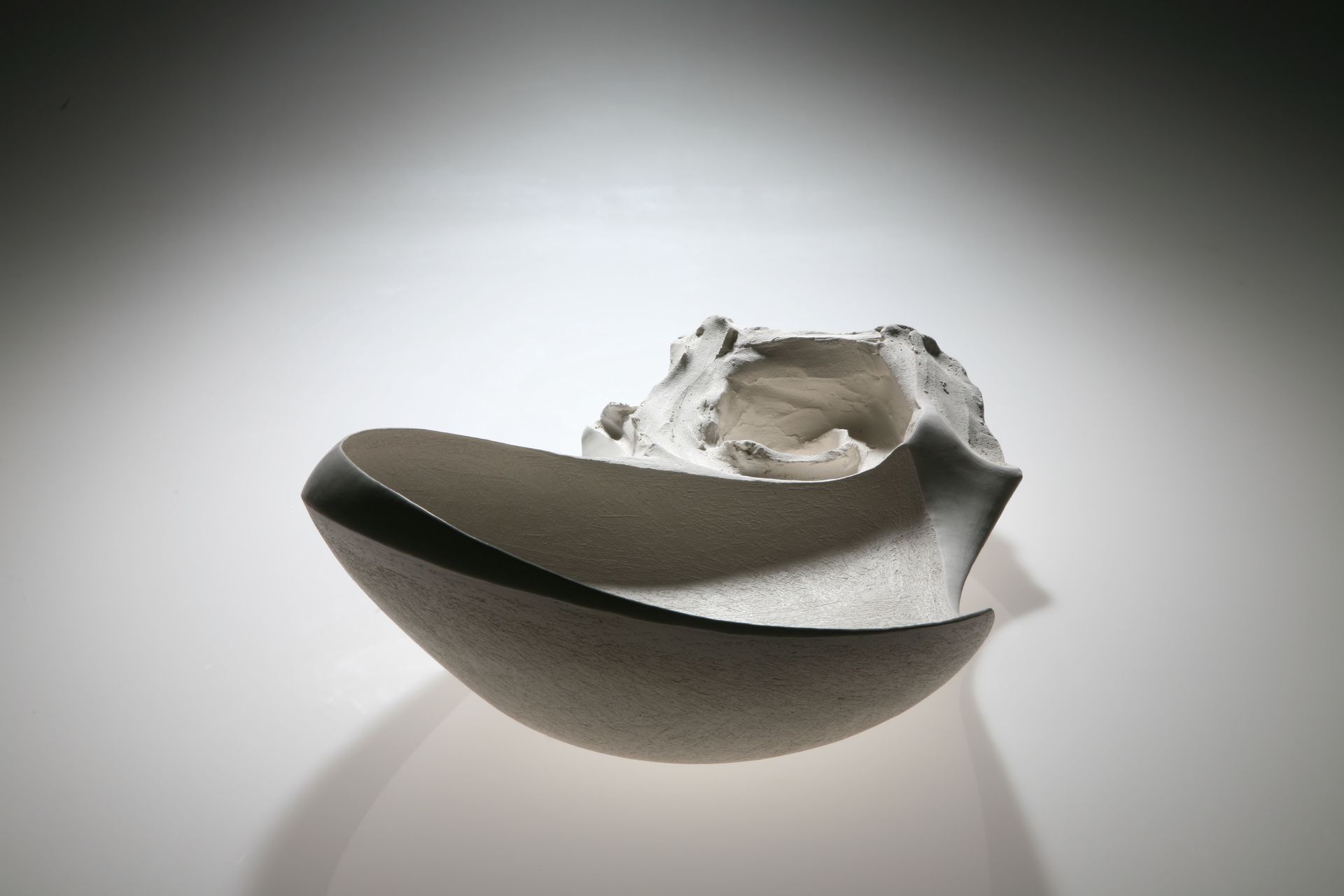
In August 2026, Beatriz Gil Vattier, intern at Olivier Cornet Gallery, wrote about Annika Berglund's Cradling III, white clay, 38x24x14cm, available to purchase for 525 Euro.
"At first glance, it may seem hard to place Annika Berglund's pieces within the storage area. It may seem difficult to grasp the idea of ceramic abstraction, glass, bronze, stone, and wool belonging to a single artist's body of work. However, this challenge quickly fades when by really looking at them thoroughly with wonder and curiosity, then you can see that they all carry the undeniable rawness and authenticity of Berglund's practice.
Annika Berglund is a Swedish-born artist based in Dublin. She has been part of the Olivier Cornet Gallery since 2012. A graduate of NCAD in 2010, she has worked as a visual artist for over 20 years, focusing on the different ways materials and textures can convey a single concept or evoke a variety of meanings.
Her practice is driven by a search for the limits of materials and the ways in which they can be pushed. Often exploring the same forms, shapes, or compositions across different media, typically clay, bronze, and glass, the artist takes the viewer on a visual journey through texture and finish.
One piece in particular drew my attention Cradling I is a ceramic work crafted from white clay and developed between 2010 and 2012. The work was part of Berglund's graduate exhibition at the 2010 Degree Show at the National College of Art and Design, Dublin, where she was awarded the National University of Ireland Art and Design Prize 2010 for Triptych – Cradling, a work that shares a similar concept. Similar pieces also featured in 2012 in one of her first group exhibitions held with the Olivier Cornet Gallery, then located at the Wooden Building in Temple Bar.
Working in an Artist in Residence in NCAD, she developed the In the Bone series, which features sculptural pieces that explore the idea of the pelvis acting as a cradle for the abdomen housing, in a metaphorical way, the centre of emotion in the human experience, among them, Cradling I pulled my focus the most.
There's something so captivating about how the shapes interact with each other, the smoothness and soothing lines of the rounded shape gently set us into a slower motion that collides with the raw, swirling opposite side of the piece, where the material remains seemingly untouched, in a state of agitation.
The pelvic bone understood as a cradle for the abdomen: under this proposal, the artist draws a line between the importance of the gut when it comes to the human experience. The torso becomes the vault where fear, excitement, hunger, and pleasure are stored, condensing the wide range of emotions that shape human experience. The pelvic bone could be conceived as the support system that holds this precious range of emotions, the artist refers to these works as vessels that nurture, within their gentle shapes, the array of emotions held in our core.
This tension between shapes and textures gets accentuated when you come to find the rest of the sculptures in the series. They are similar in shape but made out of bronze and glass, a clash of textures and materials that reveals the intricate and complex nature of the artist's creative journey. The artist opens a dialogue on how different materials can sustain the same concept and then translate into different ways of evoking sensations and emotions.
Looking at the artist's entire body of work following this first exhibition and this initial take on sculptural art, you can trace a wide range of topics, shapes, and particularly art forms. Subsequent to participating in the climate change exhibition
2°C at the Olivier Cornet Gallery, the artist stepped back from ceramic sculpture to pursue a less energy-consuming vehicle of expression. After being gifted wool by a farmer, she bet on textile materials as an eco-friendlier medium for her later works and has produced a significant body of work in felted wool ever since. As of right now, the artist is taking yet again another turn, moving into silver jewellery making and producing intricate wearable pieces. Once more, another daring endeavour that demonstrates the artist's passionate drive to learn new techniques, materials, and skills to portray her inner world.
Even if it may seem contradictory, there is something very consistent and solid about experimentation, about the artistic journey being the actual destination, far beyond the end result. Berglund is committed to the search, in Materiality, her first solo show at the Olivier Cornet Gallery, guest speaker, archaeologist and heritage consultant Franc Myles, drew a line between archaeological discoveries and the way Berglund seems to thrive through the experimentation of materials and the different nuances that clay, glass, and copper bring to her practice. Digging into this brilliant and fascinating comparison, Franc Myles passionately spoke about the thrill of discovery that both archaeology and artistic endeavours share, as well as the interconnection between clay, landscape, and the idea of humans confronting nature and place while praising the evocative sense of unfamiliarity and wonder that Annika's pieces entail.
He talked about archaeology and art as disciplines that are never truly finished, fundamentally practices that force you to return to them, to encounter them again, and yet discover something new each time. Using the phrase "sense of unfinishedness" not in a pejorative manner but as the highest compliment, he suggested that while a work may be finished, the artist continues to long for more, to search further, to explore beyond one material, topic, or form. Annika Berglund´s work reminds us of the joy of the path, of stopping to smell the roses and, within ourselves, our bones, our cores, our insides, finding both meaning and purpose in discovery."
Beatriz Gil Vattier, 20 August 2026